- Email:info@tsv-valve.com


 May 22,2026
A chemical plant in Southeast Asia installed a floating ball valve on a medium-pressure gas line. The valve worked fine for six months. Then the seat started leaking. The plant shut down for two days while maintenance replaced the valve. The problem was not the valve quality. The problem was that the installer chose a standard PTFE seat for a gas stream that contained trace amounts of aromatic hydrocarbons. The PTFE softened and lost its sealing force. A different seat material would have lasted years.
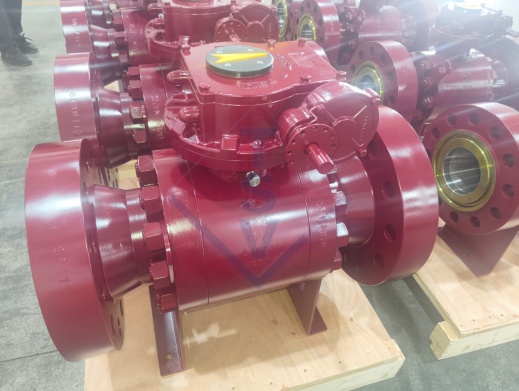
A ball valves system with floating-ball design is one of the most common choices for industrial shutoff applications. Unlike trunnion-mounted valves where the ball is fixed, a floating ball valve allows the ball to move slightly downstream under pressure, pressing against the seat to create a tight seal. This design works well for low- and medium-pressure applications, offering simple construction, fast 90° operation, and reliable shutoff. This guide walks through the critical selection parameters for floating ball valves with soft seals — without comparing specific brands or models — so you can match the valve to your piping system’s actual conditions.
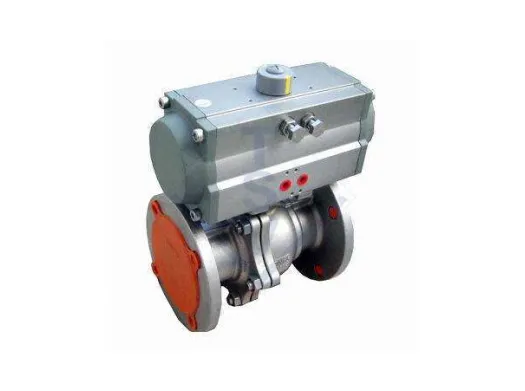
The floating design has practical limits. Above a certain pressure and pipe diameter, the force on the ball becomes too large for the seats to support, and the valve may not seal properly. For large bores or very high pressures (Class 900 and above), a trunnion-mounted ball valve is the better choice. For Class 150, in sizes less than 4″ (DN100), the floating design is well-proven. The specific requirements shall be based on the actual working conditions.
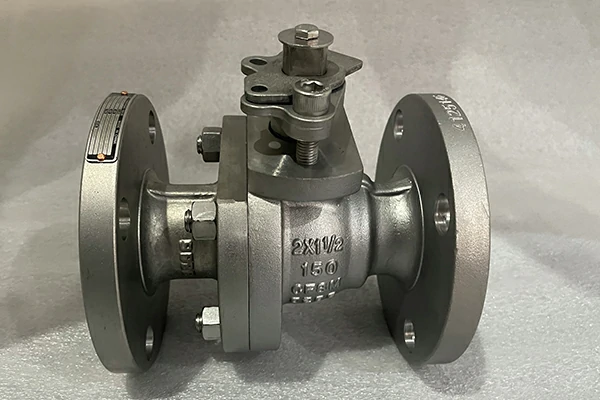
The seat is the most critical component in a floating ball valve. It must deform enough to seal around the ball but recover sufficiently to maintain sealing over thousands of cycles. Choose the wrong seat material, and the valve will leak or seize.
PTFE (polytetrafluoroethylene) is the industry standard for soft-seat ball valves. It is chemically inert, has a low friction coefficient, and maintains its properties across a wide temperature range. However, standard PTFE is rated to approximately 200°C. Above that, the material softens and may extrude under pressure. For applications involving aromatic hydrocarbons or certain chemicals, PTFE can also absorb the fluid and swell, increasing operating torque.
Reinforced PTFE (RPTFE) extends the temperature range to about 260°C. Glass-fiber or carbon-filled PTFE improves wear resistance and reduces cold flow under pressure. RPTFE is suitable for steam and high-temperature water applications where standard PTFE would creep and leak.
PEEK (polyetheretherketone) reaches 315°C and offers excellent wear resistance and chemical compatibility. However, PEEK is much harder than PTFE and requires higher seating forces to seal. It also costs significantly more. For most medium-pressure industrial applications, PTFE or RPTFE is adequate; PEEK should be reserved for high-temperature or abrasive services.
| Seat Material | Max Temperature | Key Advantage | Best Application |
|---|---|---|---|
| PTFE | 200°C | Low friction, chemical resistant | General chemical, water, oils |
| RPTFE | 260°C | Improved wear, reduced cold flow | Steam, hot water, higher pressure |
| PEEK | 315°C | High temperature, abrasion resistant | High-temp, abrasive media |
TSV provides multiple material configurations for critical wear components, including hardened metals, advanced elastomers, and graphite-based materials. The valve body is available in carbon steel, 316 stainless steel, and other high-performance metals, with primary components crafted from superior materials to ensure long-term reliability.
A ball valves system is defined by its pressure-temperature rating. The same valve body that is safe at 500 psi at 100°C may be limited to 300 psi at 200°C. Exceeding the temperature de-rating curve is a common reason for seat failure.
Floating ball valves are typically offered in Class 150, 300, and 600 (PN16 to PN100). Class 600 floating ball valves are available up to about 8″ (DN200) with floating design. Beyond that, the seat loading becomes too high, and a trunnion design is required.
TSV valves are functional from cryogenic temperatures to 800°C. However, the soft seat limits the high end. For temperatures above 260°C, metal-seated ball valves are required. Metal seats, in particular, are essential in demanding environments such as chemical processing, mining, and other non-refinery applications involving high pressure, extreme temperatures, abrasion, or corrosive media.
The valve body is manufactured through either forging or casting, each employing unique material treatment and shaping techniques. TSV’s incoming material inspection includes subzero toughness testing down to -60°C and radiographic inspection, ensuring every component meets exact quality benchmarks.
When the same valve line handles both low and high temperatures – In a chemical plant, the valve may see -20°C during winter shutdown and 150°C during normal operation. The seat must accommodate thermal expansion and contraction without leaking. PTFE has a high coefficient of thermal expansion; the valve design must include a compensation mechanism, such as a spring-energized seat or a belleville washer stack, to maintain sealing force across temperature swings.
The ball’s bore determines how much flow restriction the valve introduces. A full-port (full-bore) ball valve has an internal diameter equal to the pipe’s nominal diameter. There is no flow restriction when the valve is open. This is critical for systems that require pigging (pipeline inspection gauges) or for applications where even minimal pressure drop is unacceptable.
A reduced-port (reduced-bore) ball valve has a bore smaller than the pipe. It costs less, weighs less, and has lower torque, but it introduces a pressure drop. For most industrial shutoff applications, a reduced-port valve is acceptable and more economical.
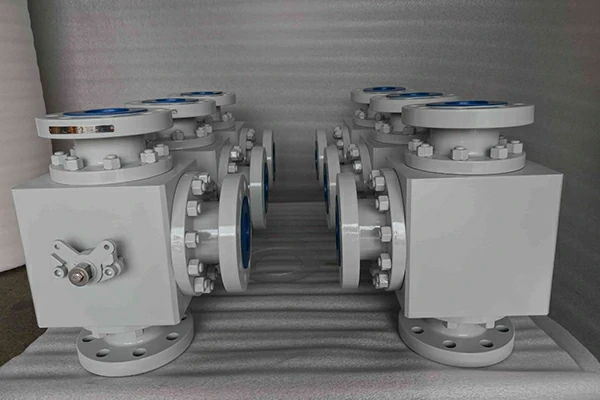
Floating ball valves are available in both full-port and reduced-port designs, as well as multi-port (three-way) configurations for diverting or mixing flow. Three-way ball valves are frequently used in water treatment filtration systems to automatically switch between filtration and backwashing modes.
Connection types – TSV offers flange, threaded, and welded connections. Flanged connections are standard for larger pipe sizes and are easier to remove for maintenance. Threaded (NPT or BSP) connections are common for smaller valves (up to 2″). Welded connections are used in high-integrity systems where flange leaks cannot be tolerated, such as toxic or flammable services.
A ball valves installation in hydrocarbon service carries a risk of static discharge. When the ball rotates, friction can generate static electricity. If that charge accumulates and discharges through the valve’s internals, it can ignite flammable vapors. The anti-static function dissipates static during switching, providing a conductive path from the ball through the stem to the valve body and then to ground.
Fire-safe design is another non-negotiable requirement for gas and petrochemical applications. A fire-safe ball valve is designed to maintain sealing integrity for a specified period (typically 30 minutes) during a fire, even after the soft seat has burned away. This is achieved through secondary metal-to-metal sealing surfaces. TSV valves comply with API 6D and API 607/ISO 10497 fire-safe standards where specified.
100% testing – TSV implements exhaustive quality validation including 100% hydrostatic pressure testing at 1.5 times the design pressure and 100% seat sealing testing at 1.1 times the closed pressure, with zero leakage or meeting applicable leakage standards. All examinations strictly follow API 598/6D standards.
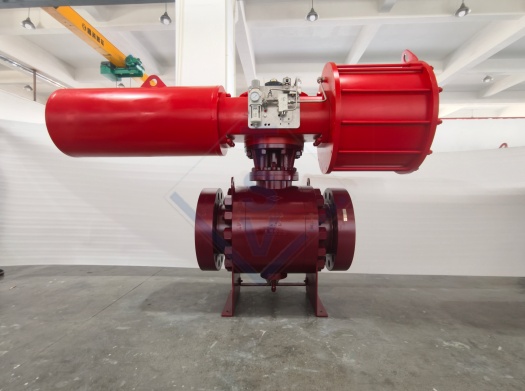
The floating ball valve can be operated manually via a lever or gearbox, or actuated pneumatically, electrically, or hydraulically. The choice depends on the required automation level, operating environment characteristics, and economic factors.
For a pneumatic actuated floating ball valve with soft seal (the product name for this guide), the actuator must be sized to overcome the seat’s breakaway torque plus any dynamic torque from differential pressure. Soft PTFE seats have low friction, requiring less torque than metal seats. However, if the fluid temperature cycles or the seat absorbs media and swells, torque requirements can increase significantly.
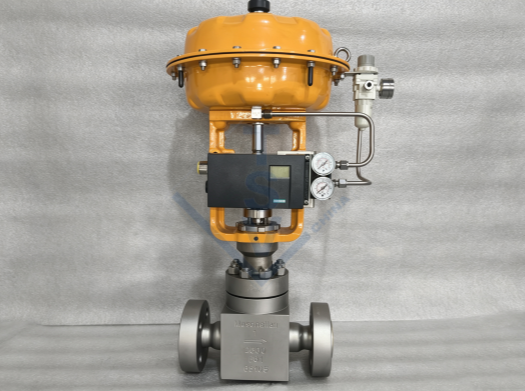
For valves up to 8″ (DN200), a rack-and-pinion pneumatic actuator is common. For larger valves or higher pressures, a scotch-yoke actuator provides higher breakaway torque. Electric actuators are used where compressed air is not available, or where precise position control (modulating duty) is required. However, ball valves are not designed for throttling; they should be used fully open or fully closed. For sustained throttling applications, a globe valve or control valve is more appropriate.
Oversizing the valve leads to poor shutoff at low pressure. A valve that is too large for the pipe diameter may never see enough differential pressure to push the floating ball against the seat. The result is leakage when the valve is closed. Match the valve size to the actual pipe diameter, not the maximum possible size.
Ignoring the seat material’s chemical compatibility is another frequent oversight. PTFE absorbs certain chemicals (e.g., benzene, chloroform) and swells. A swollen PTFE seat increases operating torque to the point where the actuator cannot move the ball, or the valve becomes impossible to operate manually. Always verify seat material compatibility with the actual fluid composition, including trace impurities.
Underestimating the actuator torque for sticky media also causes field failures. A valve that operates smoothly in a water test may seize after a month of service with viscous or polymerizing media. Specify an actuator with a 30-50% torque margin above the calculated requirement.
Specifying a floating ball valve for a high-pressure large-bore application is a common misstep. Above 8″ (DN200) and Class 900, a trunnion-mounted ball valve should be selected. The floating ball’s downstream movement creates high seat loading that can deform or extrude the seat, leading to leakage.
Can I use a floating ball valve for modulating (throttling) service?
No. Ball valves are designed for on/off (isolation) service. When operated in a partially open position, the ball and seat can be damaged by cavitation or erosion, and the valve may not shut off properly later.
What actuator is recommended for a large floating ball valve?
For valves up to 8″ (DN200), a rack-and-pinion pneumatic actuator is typical. For valves at the upper end of the floating ball range (around 8″ and Class 600), a scotch-yoke actuator provides higher breakaway torque. The actuator must be sized based on the maximum differential pressure across the valve, not the nameplate pressure rating.
How often should a floating ball valve be maintained?
Under normal service conditions with clean media, a PTFE-seated floating ball valve may require only an annual visual inspection and a torque check. In abrasive or high-cycle services, the seat may need replacement after 5,000-10,000 cycles. TSV valves are backed by a 12-month warranty, but properly selected and installed valves can last 10-15 years.
What is the difference between a floating ball valve and a trunnion ball valve?
In a floating ball valve, the ball is not fixed and moves downstream under pressure to seal against the seat. In a trunnion ball valve, the ball is mechanically fixed at the top and bottom, and the seats move against the ball. Trunnion valves are used for larger sizes and higher pressures. For applications up to Class 600 and 8″ (DN200), a floating ball valve is generally the more economical choice.
Before finalizing a floating ball valve selection, review these parameters:
For general chemical or water service at moderate temperatures (below 200°C), a PTFE-seated floating ball valve with carbon steel or 316 stainless body is reliable and cost-effective. Specify anti-static and fire-safe design if the system handles flammable fluids.
For steam, hot water, or high-temperature applications (200-260°C), choose RPTFE or PEEK seat materials. Verify that the valve’s pressure rating at the operating temperature is sufficient; de-rating curves are available from the manufacturer.
For abrasive or corrosive media, consider a floating ball valve with hardened seats or a metal seat. Soft seats will erode quickly in slurry or abrasive particle service.
For automated systems, match the actuator type (pneumatic, electric) to the available utility power and required fail-safe position. For valves operated by a pneumatic actuator with soft seal (as this product guide’s title indicates), ensure the air supply is clean and dry to prevent seat sticking.
A ball valves system that is correctly sized for the application, equipped with the appropriate seat material, and tested to API 598/6D standards will provide years of reliable shutoff. For large-scale projects, request sample valves for qualification testing. Measure the breakaway torque at the maximum differential pressure. Verify that the seat material is chemically compatible with all expected fluid components, including trace impurities.
【Request a quote from TSV】
Contact TSV with your pipe size (NPS), pressure class, operating temperature, fluid composition, and required actuator type to receive a floating ball valve specification and a seat material recommendation based on your actual service conditions.
Related News


E-mail: info@tsv-valve.com

Telephone: +86-13695850057

Whatsapp: +86-13695850057

Address: TianSheng Industrial Park,Dong'ou Industrial Zone,Oubei Town,Wenzhou City,Zhejiang Province,China